

After the 2016 El Paso TX Wal-Mart Massacre against Mexicans, Texas politician, Joaquin Castro, finally put into words, what many of us have felt and that is the absence of a national platform for Latinos in popular culture, education, politics, and the corporate world. The absence of seeing ourselves as major contributors to society is one of the main challenges that Latinos face on the national platform. At the same press conference, Joaquin Castro shared preliminary findings of a report that found Latinos made up 8% of workers in the news-and-publishing industry – an unforgiving indictment in a nation where Latinos represent nearly 20% of the population. It is time for society, especially social justice activists, to help our suppressed narrative become alive and integrated into the wider discussion of liberation from white supremacy, patriarchy, and neo-liberalism.
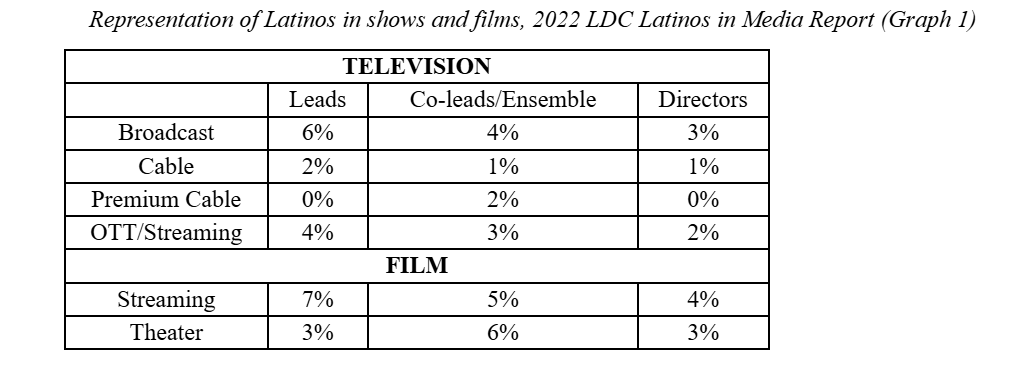

According to the 2020 U.S. Census, the Latino population in the U.S. has grown to about 20% of the nation’s population (U.S. Census Bureau). Although we are now the 2nd largest racialized group, our stories and contributions to the U.S. grand narrative are absent from the public eye. For example, Latino lead actors represent either 7% or less in television & film (2022 LDC Latinos in Media Report), Latinos represent 4.7% of Fortune 500 board seats (Deloitte, 2023), and Latinos represent 9.9% of graduate students who earned their PhDs in 2020-21 (National Center for Education Statistics).
This essay highlights 4 different contexts where the Latino community is either not seen, demonized, nor considered relevant, by the general society.
The 1st context is the live-action updates we scroll through social media platforms of unidentified masked-men kidnapping Latino immigrants, mainly of Indigenous descent, with no due process nor accountability.
The 2nd context is the demonization of Venezuelans asylum seekers who migrated in large caravans to the U.S. seeking asylum while fleeing a collapsed economy impacted by U.S. foreign policy.
The 3rd context is the absence of immigrants, in which Latinos are the overwhelming majority, in the Land and Labor Acknowledgement at Northeastern Illinois University (NEIU).
And, the 4th context is the struggle of Chicago’s City Council Latino Caucus to have influence on the mayor’s decisions that impact their constituents who comprise 29.8% of the city’s population.
My intention is to demonstrate that Latino presence and history continue to be absent from national to local platforms and from institutions of higher education even though Latinos comprise one-fifth of the nation, one-third of Chicago, and almost half the student population of NEIU.
I argue that the absence of Latino representation on several platforms makes our community vulnerable to xenophobic attitudes, policies, and actions that continue to dehumanize communities as “illegals,” “outsiders,” and/or “criminals.”
Social media abductions
It’s 2025 and on a daily basis I watch at least 1 kidnapping of Latino immigrants, many of who are Indigenous, by masked men who refuse to identify themselves, which is a violation of our constitutional rights. The American public was promised that the immigrant removal policies will only arrest undocumented immigrants with criminal records. Since the inauguration, ICE has detained slightly over 56,000 immigrants, nearly 72% of all detainees, have no criminal record.
Also, according to Newsweek, the top countries of citizenship among those arrested were overwhelmingly from Latin America, with Mexico leading by a wide margin at 11,586 arrests. This was followed by Guatemala (3,202), Honduras (3,167), El Salvador (1,230), and Nicaragua (1,141). Other notable countries included Venezuela (965), Ecuador (796), Colombia (419), Brazil (349), and Peru (298).
This is not a “new” strategy that the U.S. government has used to remove Mexican families and communities from the social fabric of booming cities across the United States.
In the 1930s, the Los Angeles Welfare Department began deporting hospital patients of Mexican descent. One of the patients was a woman with leprosy who was driven just over the border and left in Mexicali, Mexico. Others had tuberculosis, paralysis, mental illness or problems related to old age. Orderlies carried them out of medical institutions and sent them out of the country.
These were part of the “repatriation drives,” a series of informal raids that took place around the United States during the Great Depression. Local governments and officials deported up to 1.8 million people to Mexico, according to research conducted by former California State Senator Joseph Dunn, who in 2004 investigated the deportations under President Herbert Hoover. Dunn estimates around 60 percent of these people were actually American citizens, many of them born in the United States to first-generation immigrants.
In 1954, Mexican immigrants had been caught in the snare of Operation Wetback, the biggest mass deportation of undocumented workers in United States history. As many as 1.3 million people may have been swept up in the Eisenhower-era campaign with a racist name, which was designed to root out undocumented Mexicans from American society.
It needs to be noted that these practices are in accordance to Milton Friedman’s philosophy that stresses the importance to allow “illegal” immigrants into the country so they can be easily exploited and, eventually, disposed. Friedman was an economist who supported the privatization of public entities (neo-liberalism) from national governments and was a major influencer for the U.S. and Britain during the early 1980s.
Root of recent migrant crisis: U.S. economic sanctions
Between the Obama and first-Trump administrations, the United States placed four strong economic sanctions against Venezuela: Executive Orders #13808, #13827, #13835, and #13850 (2017-19).
Although there are many debates if these sanctions were appropriate or not, but what cannot be debated is the impact on the Venezuelan economy and its people. By 2020, it was reported that Venezuela was expected to lose $17 to $31 billion. It is not surprising that the national economy eventually collapsed and initiated an exodus. As of August 2023, more than 7.7 million people have left Venezuela, making it one of the largest external displacement crises in the world. President Donald Trump, in his first term, does not hide his sinister intentions for the sanctions during a press conference on June 10, 2023, stating “When I left, Venezuela was ready to collapse. We would have taken it all. We would have gotten all that oil. That would have been right next door.”
Because we do not know Latin American history, nor U.S. Foreign Policy in Latin America, immigrants from south of the U.S. border are seen as outsiders, completely detached from the domestic USA. This perception erases the power dynamics between the United States empire and its neo-colonial relationship with Latin American countries.
So, the immigrants become “invaders,” to the American public who do not bother to analyze the economic push factor of the crisis. This context paves the narrative to demonize Latino immigrants as “illegals,” and makes them “disposable” to the current campaign of terror we face as a nation.
For what it’s worth
Chicagoans have every right to be upset at our city leaders for the long history of under-sourced communities that are in low-income Black and Latino neighborhoods. So, when we hear that this influx of migrants come into our city and utilize resources, it is not surprising for many folks to get triggered and shout, “Hey, what about us?!?!”
Four-hundred million dollars is a lot of money and if that upsets you, well, let me share with you another pile of money that disappears. In 2020, CRAIN Chicago Business reports that Chicago has earmarked more than $2 billion in economic incentives (Chicago taxpayer $$$) to jump-start huge privately owned mixed-use developments on the North Side and in the South Loop. While proponents argue that these corporations help contribute to the local community, the article by CRAIN Chicago Business, questions that assumption. These incentives include tax breaks for corporations while the rest of Chicago foots the bill to help run the city. Yet, no one seems to make any noise about this.
Latino and immigrants in NEIU’s Land and Labor Acknowledgement
In recent years, Northeastern Illinois University has created a Land and Labor Acknowledgment that includes the history of Native peoples to the land. Potawatomi, Ojibwe, and Ottawa, in which the university stands on and the history of chattel slavery suffered by many ancestors of Black Americans. According to Theresa Ambo and Theresa Rocha Beardall (2023), “Land acknowledgments are an evolving practice intended to recognize Indigenous Peoples as the traditional stewards of their homelands and the lands occupied by an organization or a particular gathering (p. 104).” Some institutions include a labor acknowledgment that highlights the history of slavery. The addition of Black labor history to the university’s Land Acknowledgement presents itself as an act of solidarity between two racial groups harmed by colonization and white supremacy. According to Terah Stewart (2021), “the purpose of [land and labor acknowledgements] is to honor and remember the violent histories and legacies of settler colonialism.”
Since the Monroe Doctrine of 1823, the United States has consolidated its dominance over Latin America through direct military invasions or indirect interventions, annexing territories, overthrowing governments and securing the rights to use canals. It launched a war with Mexico and occupied/settled about 55 percent of its territory, militarily occupied Haiti and plundered its national wealth, colonized Puerto Rico to this day, and sent warships to “monitor” elections in the Dominican Republic, just to name a few.
With respect and in the name of solidarity against white supremacy, patriarchy, and neo-liberalism, I ask NEIU’s Land Acknowledgment committee to include the long history of neo-colonialism which has spurred high levels of immigrant exploitation by the same power structures who removed Native Americans from their land and enslaved Black people to work the land.
Here are 2 examples on how CSU-Long Beach and Seattle Colleges wholeheartedly include the history of immigrants in their Labor Acknowledgment:
Seattle Colleges Labor Acknowledgement
We remember that our country is built on the labor of enslaved people who were kidnapped and brought to the US from the African continent and recognize the continued contribution of their survivors. We also acknowledge all immigrant labor including voluntary, involuntary, trafficked, forced, and undocumented peoples who contributed to the building of the country and continue to serve within our labor force. We acknowledge all unpaid care-giving labor.
CSU-Long Beach Labor Acknowledgement
We recognize and acknowledge the labor upon which our country, state, and institution are built. We remember that our country was built on the labor of enslaved people who were kidnapped and brought to the US from the African continent and recognize the continued contribution of their survivors. We also acknowledge all immigrant and indigenous labor, including voluntary, involuntary, trafficked, forced, and undocumented peoples who contributed to the building of the country and continue to serve within our labor force. We recognize that our country is continuously defined, supported, and built upon by oppressed communities and peoples. We acknowledge labor inequities and the shared responsibility for combatting oppressive systems in our daily work.
I hope for NEIU’s Land and Labor Acknowledgement to include the history of immigrants’ contributions to society amidst institutional racist practices and economic exploitation. This history cannot be dismissed especially when we are a Hispanic-Serving Institution and Minority-Serving Institution and the fact that our leaders always boast in having one of the most culturally diverse student bodies in the Midwest. Capturing the continuous history of oppression on immigrants includes the narrative of the Latino community as well as other immigrant groups from the different parts of the world that make-up NEIU’s student body. Now, more than ever, NEIU needs to stand FIRM TOGETHER.
Chicago “Progressive” Politics is still Chicago Politics
In Chicago, the successful 2023 mayoral campaign for Mayor Brandon Johnson was endorsed by several north side Latino political leaders who were part of a multicultural coalition that included the Chicago Teachers Union. Illinois U.S. Congresswoman Delia Ramirez proudly remarked,“[i]t was clear for us, Brandon has heard us, Brandon has showed up,” Ramirez said. “And we feel like this is an opportunity for Black and Latino leaders to stand together. For us, Brandon Johnson is it.”
Two years later, the Chicago City Council Latino Caucus addressed several concerns in a public statement. It spoke on issues of representation at the city leadership level. They called for an independent investigation on the handling of ICE agents’ presence in the city by the Chicago Police District in June of 2025. Being a sanctuary city, CPD officers are not allowed to cooperate with the federal agencies. The caucus demanded that the mayor’s office to become transparent on his strategy and to collaborate with members of the caucus, whose constituents are overwhelmingly impacted directly.
The statement also addressed the Latino Caucus’ request to collaborate with the mayor’s office to choose the new interim CEO for Chicago Public Schools. The mayor never responded to their request and has already made a decision without their input. Adding insult to injury, Latino students comprise 47% of Chicago Public Schools, yet, there is no representation, nor minimal discussion, in particular to the concerns and needs of Latino students in the CPS 5-year plan. You can’t get more invisible than that.
Concluding Remarks
In her dissertation, “The American Dream: From the Latino Perspective,” Dr. Vanessa Flores indicates that most Latinos believe in the American Dream, in terms of being able to be successful with only hard work and determination. This optimistic perception of the American Dream leads to an immense amount of unrealistic hope for these individuals. This meaning of the American Dream creates a picture that only these two things are needed to achieve success, and individuals are truly passionate about it. However, the barriers in place, especially for Latino immigrants, are not being considered or even discussed more often. The result of these barriers coming to individuals as a surprise, has led to higher rates of mental health disorders, including depression and anxiety, within Latino immigrant communities. It is apparent that many Latino immigrants view the U.S. through the lens of “opportunity,” and are less willing to see their U.S. experience through a critical lens.
In 2019, Aspen Institute Latinos and Society warned us that Latinos are locked into one-dimensional narratives about immigration or neglected in our primary Black and white narrative of America — Latinos, like Native Americans and Asians, rarely see themselves represented at all (let alone accurately) in the American story.
They assert that we can fix this absence by creating institutional spaces to tell more complete stories that invest in the dynamic intersectionalities of Latino communities, and by integrating Latinos into all aspects of the fabric of America. If not, we will continue to have one-dimensional conversations that not only misconstrue the most important demographic influencing our country today, but allows the xenophobic attacks and crimes towards our communities as acceptable.
This can no longer be acceptable. Tell our stories and stop the raids.
By Gabriel A. Cortez, Ph.D., Professor in Educational Leadership