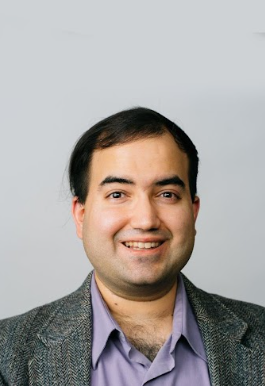
In an in-depth and follow-up interview with Jesse Franco, I.T. Support Associate at NEIU, he went into detail about the front end information technology work being done in the library that includes cybersecurity risks, social engineering scams and the maintenance of the library’s digital resources and collections. Previously, the Independent went into great detail with Franco about reasons for not having a Linux lab or a fleet of Linux rental laptops on campus.
Franco talked about the details concerning the security of computers within the library. “[If] there’s a pop-up that says that I have to call this number, I make sure that website gets flagged, so I send an email to UTS [University Technology Services] saying ‘Hey, this IP address is a scam IP address.’” Franco said that it is a technical support scam where the computer user gets suggested to call the number, give a credit card number and get charged thousands of dollars. This is referred to as a social engineering scam that tricks computer users into divulging personal financial information. “But the actual security infrastructure is actually handled by the networking people here [at UTS].”
“We have a pretty good security system set up, and we kind of have to because the school has to have cybersecurity insurance, well through the state,” Franco said. “And we’re supposed to do certain things at certain parts of the year to keep our cybersecurity in good standing.” If the necessary security precautions are not taken, “the cybersecurity people will drop us as part of the state package, and we have to pay extra to get back on it,” Franco admitted.
Furthermore, all of the laptops at NEIU have “something called ‘Absolute’ on it, which is part hardware update and part GPS tracker.” In the event of a stolen or non-returned laptop for whatever reason, it allows remote wiping of the laptop, and then a police report will need to be filed. The state would press charges for that because the laptops are property of Illinois and not the library. This protocol includes NEIU-distributed laptops as a part of the library loaner program and any NEIU-distributed laptop for various departments. If there is a sticker that says “Property of Northeastern Illinois University, State of Illinois” then it follows this security protocol.
Reasons for the strict computer security measures are legitimate, as Franco continued to explain. “Let’s say that we apply for a grant, we get grant money [and] the very second we buy equipment with that grant money, it still becomes property of the state because again it was given to the school, not to the actual individual that wrote the grants,” Franco elaborated.
Furthermore, the library gets advised by UTS before the purchase orders are made. According to Franco, since the state of Illinois owns the purchased items from the grant money, they would require investigations, police reports, holding individuals who rented the equipment accountable, marking the devices as lost or stolen, and reassessing their policies.
—
In order to keep up with the increasing reliance on digital resources such as online scholarly journals, various databases and the Google suite, the library uses a dual system of internet service providers [ISPs]. “So we have Comcast as our main [ISP] and AT&T is our backup, so that if for whatever reason Comcast just has an outage for whatever reason, we can switch over to our AT&T fiber system.”
“For example, Loyola and [NEIU] got rid of too many databases that cost almost like half a million dollars each,” Franco said. “These databases are very expensive and they deal with sciences, medicine and the hard sciences, and those cost money, so those are the ones that are kept.” Alternatively, “things like English, literature [and] history” get cut.
One way to cut costs is to eliminate licensing fees within NEIU’s I.T. infrastructure. Currently, Windows is the dominant operating system on NEIU’s desktop and laptop computers, but integrating any Linux operating system would eliminate the cost of licensing fees entirely. The needs of student computer use begins with the web browser and office suite for general use. Specific majors would require more niche software.
“We have to actually say ‘Okay, so what database is being used the most, which one’s being used the least, and the one that’s being used the least gets cut,’” Franco said. “It’s not just this library. Libraries across the state, they have to say ‘Hey you know what? We’re not getting [enough] students, [and] the budget’s not what it once was, so you need to find places to cut.”
Balancing budgets, maintaining security and keeping accessible resources are critical issues for the library and its I.T. services. Policy management is a topic that affects all of these issues regardless of its justifications. Franco’s insights have proven valuable for students to grow aware of the tasks that must take place on both the front end and back end of the library and its I.T. infrastructure.