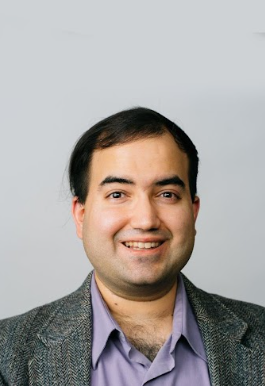
NEIU’s Ronald Williams Library has offered a long-term loaner laptop program for the past several semesters. The Independent received the opportunity to uncover the inside scoop about the program with Jesse Franco, I.T. Support Associate. The library loaned out 50 Dell Latitude laptops that are running Windows 10 in Spring 2025, and Windows 10 is set to reach end-of-life later this year. Additional support for Windows 10 will cost an extra fee from Microsoft after October 2025. At the time of this article and according to The Verge and ZDnet, business customers like NEIU will have to pay $61 for the first year, $122 for the second year and $244 for the third year per computer license in order to continue receiving security updates for Windows 10.
The library has a stash of approximately 50 of these laptops as a part of its loaner program. The replacement cost of a single laptop due to loss or damages to the student borrowing the laptop would come out to be $1544, and $35 for the USB-C charging adapter and cable.
$1,544 is a tremendous cost for a Dell laptop when considering that the base Macbook Pro costs $1,599 in 2025 and the base MacBook Air costs $999 in 2025. The $1,544 price tag of the Dell laptop may feel like a scam when considering the tasks that students need it for. The starting cost of a new base model Dell Latitude laptop in 2025 comes out to be $729, and there are additions and substitutions that the purchaser at NEIU could customize when dealing with the hardware and software. This cost is less than half of the cost of the laptops from the loaner program’s fleet of laptops.
The Dell Latitude rental laptops are powered by an 11th Gen Intel Core i7-1165G7 processor, and it features a base clock speed of 2.8 gigahertz (GHz), while running at 1.69 GHz at the time of checking. Each laptop has 16 GB of RAM installed.
Students need a web browser, office suite and some specifically specialized software that is unique to their majors such as a C/C++ compiler for computer science students, QGIS for GIS students or Adobe software for art and design students.
The rental laptops have Microsoft Office Professional Plus 2019 installed on them for the creation of text documents, presentations, spreadsheets, databases and other essential productivity tasks. The web browsers installed on this laptop include Microsoft Edge, Mozilla Firefox and Google Chrome. VLC media player is also installed for viewing and listening to media files.
The contract that students sign in order to rent out these laptops forbids them from autonomously installing additional software, and the student must contact the library in order to request software installations for additional applications. When a student in the past converted a rental laptop into a Linux machine, Franco told the student, “You weren’t supposed to do that.” The student took 20 minutes to set up an operating system called Kali Linux on the laptop.
According to Franco in a previous article from the Independent, computer science students have requested a fleet of Linux laptops and a Linux lab on campus. Using one of many Linux operating systems would eliminate licensing fees of the operating system entirely. If NEIU saves money in one area, they can use the money in a different area for the benefit of the students.
Franco explained how the library has two categories of the laptop loaner program: short-term and long-term loans. On one hand, “the long-term loans are for people that want to use them, as the name implies, for the whole semester,” Franco said. On the other hand, the short-term loans are for one or two weeks as needed by the student.
The laptop loaner program came about because “I wrote this paper for my master’s and eventually the pandemic hit,” Franco said. After the pandemic, his fellow staff members decided to implement the details of his master’s paper, which was about loaning out laptops to students. It takes a lot of time to manage and ensure that all computer hardware abides to state policy, and “we need equipment to do certain things, and we just don’t have the money to buy it,” Franco said. By looking at the big picture and considering that the currently running operating system will reach its end-of-life very soon, it is easy to understand that this is a problematic situation for the library.
“What we want to do is shut down the program the way it is now [and] just give those laptops back to the school, to the state,” Franco said, “and basically get grant money to buy better laptops.” Franco elaborated that different laptops will be designated for different subjects such as computer science, GIS and general usage.
“I.T. infrastructure here could be better,” Franco said. “It always could be better, but for right now to service students, faculty [and] staff, it’s good enough especially for a state school.” “We’re doing the best we can with what we have,” Franco said. “Again, until we get grant money,” that is the one thing that can really improve the I.T. situation at the library. Franco concluded by saying as long as the rental computers have internet access and decent specifications and can install other software, it should be sufficient for students.