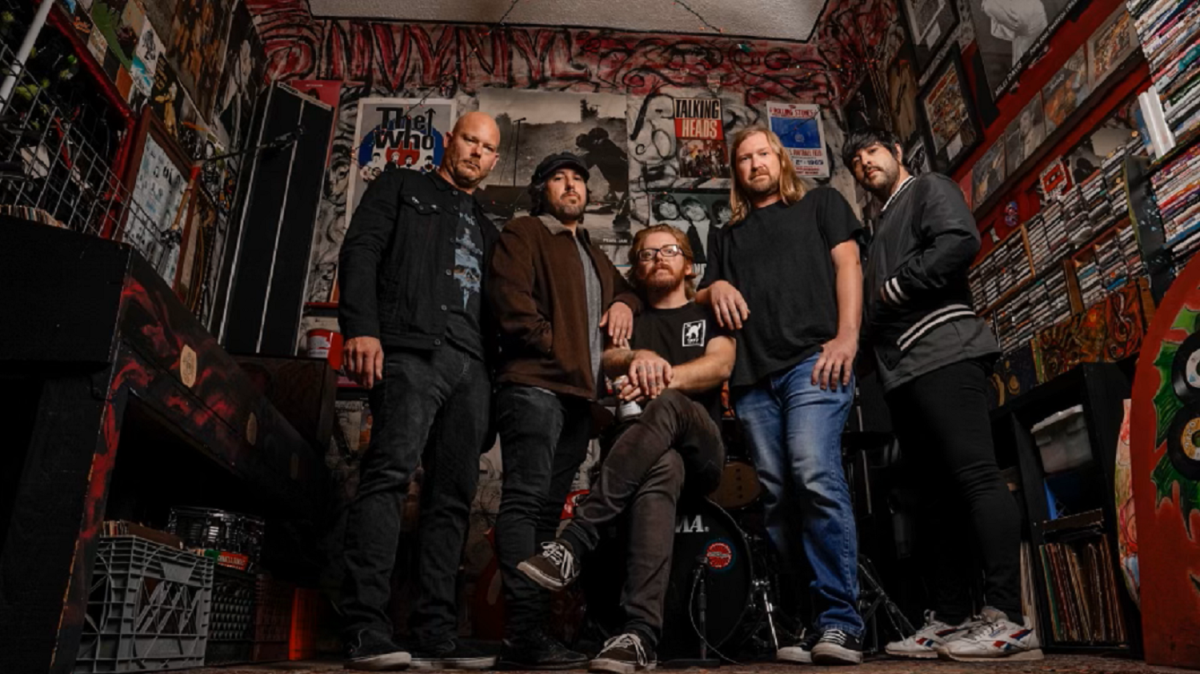
Envision Community Services, a non-profit organization founded in 2011 in the West Lawn neighborhood, expanded into the Pilsen neighborhood in September 2024. This summer, at a house-music-themed fundraising event, Envision volunteers and staff shared the five services the organization provides to the Pilsen community: workforce development, education initiatives, restorative justice, and public and behavioral health.
Envision Office in Pilsen
Envision focuses on empowering at-risk communities in neighborhoods such as Gage Park, Garfield Ridge and Archer Heights. The non-profit’s decision to expand to Pilsen was due to many Enivison staff members. This included the CEO of Envision, Roberto Montejano, who lived and grew up in the Pilsen neighborhood.
“I’m not going nowhere. People are moving out. I’m moving in,” Montejano said in response to the ongoing gentrification that has been present in Pilsen.
“We have a love for this community,” Jenny Avitia, the senior manager at Envision, said.
Avitia, who has been working for Envision for five years, explained that they have launched a street outreach program called “Save Our Streets.” This “SOS” program aims to help youth aged 14 to 24 years old in the Pilsen community.
“The goal of the program is to be able to help them with any housing needs that they have, educational, financial, any type of barriers that they’re currently confronting that is keeping them from reaching their goals,” Avitia said.
Envision hopes to create some success stories within Pilsen’s youth by providing and supporting youth with scholarships that can help them with college expenses. Every year, Envision aims to provide six to 10 scholarship opportunities.
“Right now our biggest goal really is to get as many people in through our doors,” Avitia said about the Pilsen office.
The Envision office is located at the Lacuna Lofts, 2150 S. Canalport Ave., 4th Floor, Suite 4 A-10, Chicago, IL.

From Gang Member to CEO
Montejano, the founder and CEO of Envision, shared their journey about how they started in non-profit work.
Montejano was one of seven children born to immigrant parents who moved to the United States from Mexico. They arrived without knowing anyone. In that isolation, Montejano’s mother was in a domestic violence situation with her husband. While she worked two jobs, he did not work at all.
“I’m the dark one. They call me El Niño in the house. They think I broke up their family,” Montejano explained in regard to why Montejano uses gender-neutral pronouns.
At eight years old, Montejano’s father was killed in 1984, which led Montejano to join a rebel gang in Little Village.
“They told me we love you. We’ll share your pain. We’ll die for you. At eight years old, what am I supposed to say?” Montejano said.
Montejano experienced being shot and going to prison as a juvenile throughout childhood. At the age of 17, Montejano marked the last and final time in prison, as Montejano was charged as an adult.
Montejano credited Marilu Gonzalez, a member of Neighbors Against Gang Violence, as a mother figure who visited Montejano in prison and regularly brought along their pregnant girlfriend. Gonzalez encouraged Montejano to submit book reports. In prison, Montejano obtained a GED.
After Montejano’s release from prison, Gonzalez offered to pay for the removal of gang-related tattoos on their face and knuckles, which allowed Montejano to pursue a career.
“I did 29 years of working with non-profits, helping out individuals come out of prison. Doing re-entry. Transitioning out of gangs,” Montejano said.
Montejano worked up the career ladder to several director positions, including in workforce development, education, ex-offender sites and expansion sites. Montejano discovered that the non-profit sector often involves a one-sided approach to work.
“People say they want to do better for our community, but they were profiting off of my story. Off of the work that I was doing,” Montejano explained this as the reason behind starting their non-profit organization—Envision in West Lawn.
After conducting a needs assessment, Envision began providing services and resources in the West Lawn community. It was founded on a volunteer model, supported by grants, partnerships and sponsorships, to aim to help increase awareness and solutions available for the community’s youth.

Summer Working for Envision
Edgar, one of Envision’s clients, explained how he became a case manager after joining Envision. Similar to CEO Montejaro, Edgar grew up in Little Village and went to school in Pilsen.
“I also felt victim to a lot of the deficiencies we have in our community,” Edgar said. He joined a street organization and dropped out of high school during his sophomore year.
In prison, Edgar was tired of being stuck there. He joined an at-risk youth program similar to Envision and obtained his GED.
Now, Edgar teaches Latin American history at Herbert High School. During the summer, Edgar works on street intervention work with youth as a full-time employee for Envision.
“It allows for much more of a personal connection. And to be honest, it allows me to get more results instead of me having to deal with 170 students,” Edgar explained in regard to the work he does with one-on-one interactions at Envision.
Throughout the summer, Envision created more community events, including four back-to-school drives that involved giving away free school supplies to youths returning to classes.
“Envision’s never here to say we are the solution to any problem. We are part of the solution to many problems,” Montejano said.